All Valorant Ranks in Order: The Complete Ranking System Explained
Valorant's competitive ranking system divides its player base into skill tiers, making matches feel more competitive. While the use of competitive ladders is similar across most competitive play, Valorant's is a bit different and more transparent than in most other games.
Here, we'll cover valorant's 25 competitive ranks. Whether you're a beginner who just qualified for ranked or you're someone figuring out the best way to climb to the top, there's something to gain from properly understanding the valorant rank system.
Every Valorant Rank in Order from Lowest to Highest
Below is a comprehensive list showing each rank tier, its number of divisions, and its player distribution percentage, based on V26 Act 1 data obtained from Esports Tales.
Rank Tier | Divisions | % of Players | Top % |
Iron | 1, 2, 3 | 6.20% | 100% |
Bronze | 1, 2, 3 | 18.32% | 93.80% |
Silver | 1, 2, 3 | 22.71% | 75.48% |
Gold | 1, 2, 3 | 21.75% | 52.77% |
Platinum | 1, 2, 3 | 15.02% | 31.02% |
Diamond | 1, 2, 3 | 9.25% | 16.00% |
Ascendant | 1, 2, 3 | 5.47% | 6.75% |
Immortal | 1, 2, 3 | 1.25% | 1.28% |
Radiant | None | 0.03% | 0.03% |
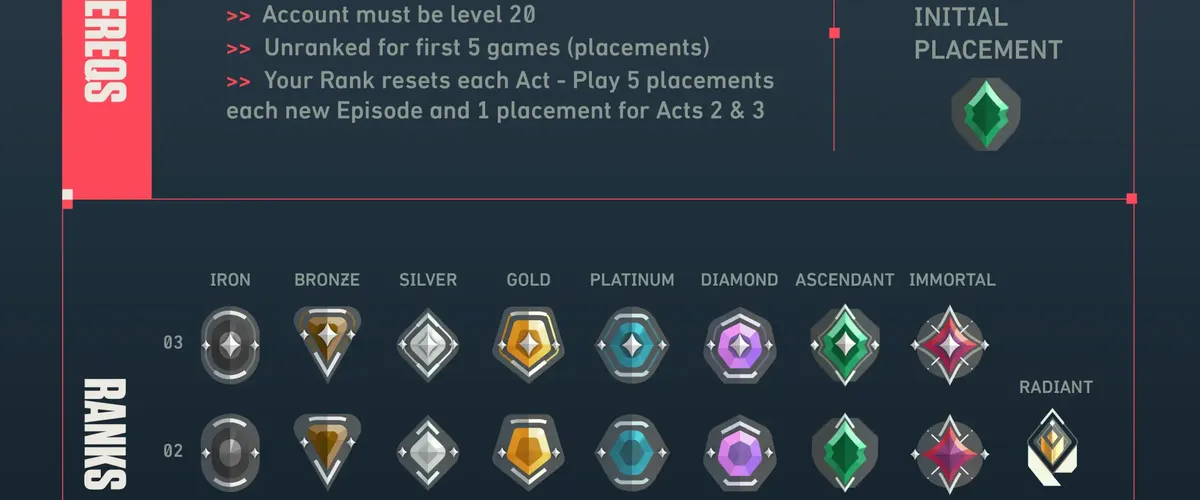
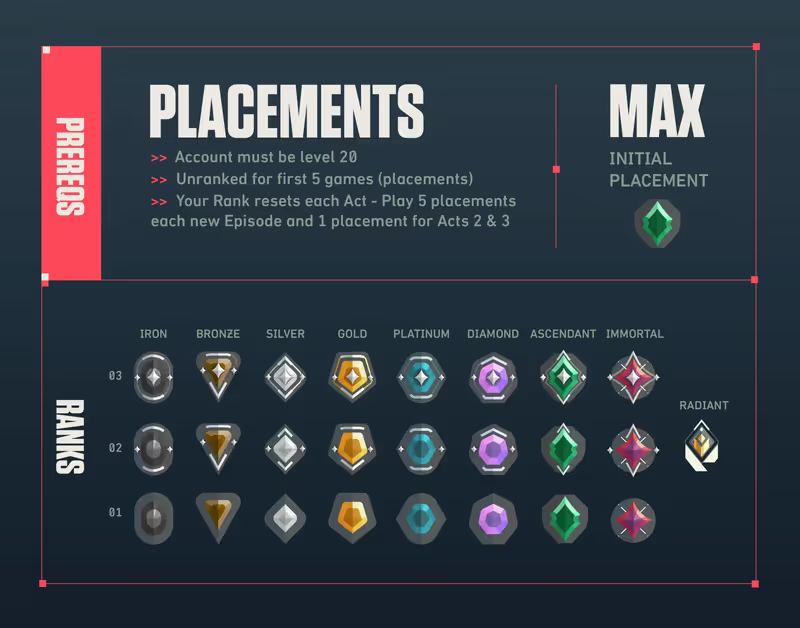
Iron is the lowest rank for players, with a player share of 6.2%, while Radiant is the highest rank, with a cap of 500 players, making up just 0.03% of the player base. Every tier, except the top, is divided into three tiers, meaning there are 25 ranks in total.
It's also worth familiarizing yourself with the color progression, and being familiar with them ensures you know what fight you're getting into from the loading screen alone.
How the Valorant Ranking System Works
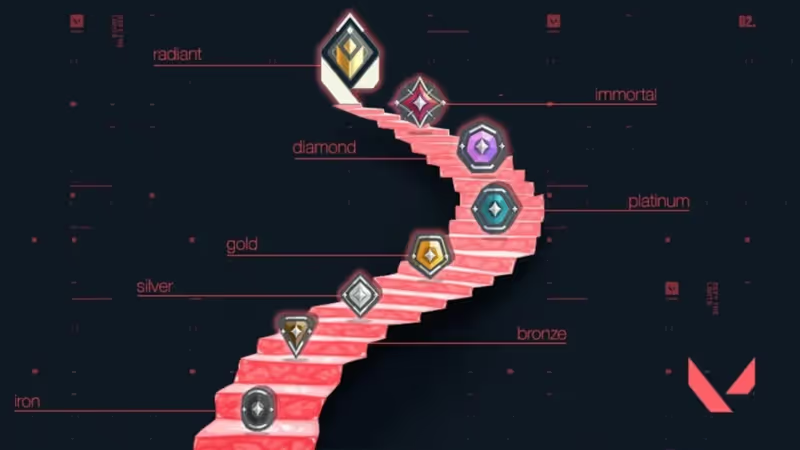
There are two important player stats that determine your competitive matchmaking placement in Valorant: your Rank Rating (RR) and Matchmaking Rating (MMR). RR is the number that you see, with every win giving players 10 to 50 RR, while every loss results in a 10 to 30 RR deduction. You get promoted upon reaching 100 RR, but it's a demotion if RR goes to 0.
MMR is a hidden number that determines which ranked mode lobby you are assigned and how much RR you win or lose for each game played. Having a higher MMR than your Rank results in a faster climb, with larger RR gains and smaller deductions for losses. If MMR is lower than your rank, then you get smaller RR rewards and bigger deductions.
The rules governing Immortal and Radiant players work differently, with RR now accumulating past 100 and no automatic promotion. At this rank, regional RR thresholds are set by Riot Games, such as 100 RR for Immortal 2, 200 RR for Immortal 3, and around 300 RR for Radiant qualification. But actually becoming part of Radiant also requires that you be among the top 500 in your region.
Placement Matches and Valorant Act Rank Badges
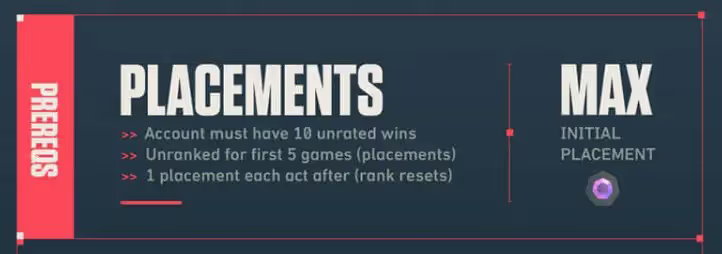
Season 2026 will run on a year-long cycle that's split into six Acts. At the beginning of Acts 1 and 4, players undergo five placement matches that adjust their current standing based on the results, typically resulting in a two- to three-division drop from before the placement matches are held. For Acts 2, 3, 5, and 6, you only play one placement match and land closer to the original rank before the placement matches are held.
When new players unlock competitive mode at account level 20, they are also required to go through these placement matches. But for these, Ascendant 1 is the highest possible assignment you can receive.
Your rank is represented by your Act Rank badge on your career card, with each small triangle representing a ranked match win, along with the rank color for when it was won. The top triangle represents your highest-ranked win, which determines the badge. Borders are upgraded at intervals of 9, 25, 50, 75, and 100 wins in an Act. This means you'll need to win 9 competitive matches to earn the badge.
You might also like
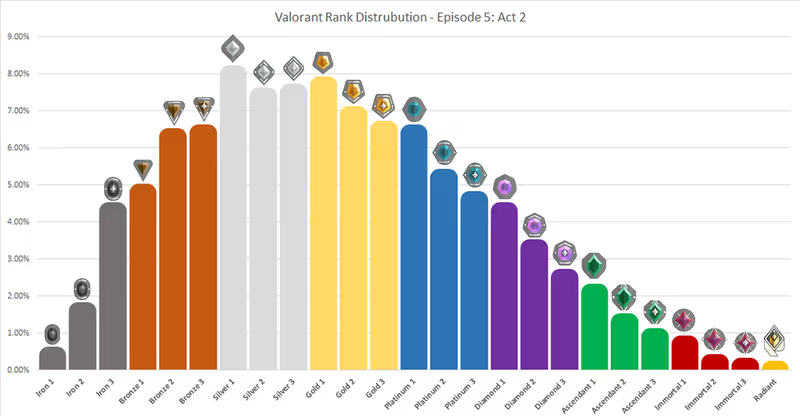
Current Valorant Rank Distribution

This is the current rank distribution among players.
●Half of the players are ranked between Silver and Gold, meaning that a player in Gold 1 is better than 53% of all players.
●Platinum means you're in the top 31%, and Diamond means you're in the top 16%.
●Ascendant puts you in the top 6.75% while Immortal is for the top 1.28%.
●Radiant is the top 0.03%, which means you're playing in a rather closed community for most Radiant matches.
These numbers are taken from vstats.gg. Looking at the data, the bell curve peaks between Silver 2 and Gold 1, which represents the game's average player level. This means that small improvements in game fundamentals, such as crosshair placement and utility use, greatly affect your game.
Valorant Rank Decay, Rank Shields, and Queue Restrictions
No Traditional Rank Decay
Your rank doesn't drop from inactivity; it is hidden instead, but easily brought back by completing one competitive match. The exception here applies to Immortal and Radiant, who must play one ranked match per seven days.
Rank Shields
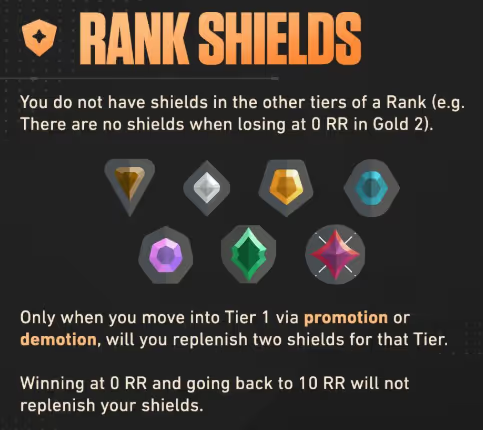
Every Rank's Tier 1 division receives 2 shields that absorb losses at 0 RR, meaning you'll need to lose thrice at 0 RR before being demoted. This applies to all ranks except Radiant.
Queue Rank Restrictions
Restrictions are implemented to keep Valorant's competitive system fair. Duos can queue together with only a one-tier gap, such as Gold and Platinum, or Diamond and Ascendant. Iron and Bronze can queue up to Silver, while Immortal and Radiant can only do solo, duo, or five-stack, while four-player parties are never allowed in ranked mode games.
Additionally, five-stack parties receive a 25% RR penalty if there's any rank deviation, but that penalty climbs up to 75% when there's a Radiant player in the party.
How to Rank Up Faster in Valorant

Consistency is extremely important for earning more RR and climbing the ranks faster. This means that winning 13-5 with 15/10 awards is considered better than a 14-12 loss where you got 30 kills. Here are the three things to note for faster RR gains.
Play Your Best Agents Consistently
Consistency is important, so save experimentation elsewhere. Play your best characters and ensure that you know enough about maps and team comps to avoid surprising situations where you can lose big.
Stop Playing on Autopilot After Losses
The effect of tilt on games is real, and it's better to take a break after losing twice in a row than to force yourself to play while making questionable decisions.
Learn One Thing Per Bracket
Good crosshair placement can get you through Silver, but higher ranks will demand more from you. Gold through Platinum will require you to learn utility lineups and default setups, while Diamond and above will require timing, rotations, and economy management.
If you're looking to improve targeted sections of your game, Valorant coaching from igitems pairs you with high-ranking players who provide the feedback you need to make the necessary adjustments. This can save you hundreds of hours of gameplay.
And if you'd rather just skip the grind of climbing the ranks, igitems' Valorant boosting service is worth considering. Alternatively, you can also start fresh on a higher rank with ranked Valorant accounts.
The Ranked Grind Never Really Ends

Valorant's Ranking System is one of the more transparent ladders in competitive game titles, with visible RR, rank distribution, and a seasonal reset that maintains balance in ranked play. Knowing the game's inclination toward consistent play will make it easier to decide on the right strategy for ranking up efficiently.