Everything You Need to Know About Eggs in Pokémon GO
Eggs in Pokémon GO are kinda tricky to learn, but once you do, it's all worth it. You can't just find them already hatched out in the wild; hatching Pokémon eggs requires walking a certain distance before they crack open. You should understand how the system works to play this game, or else you lose out on free Stardust, XP, and rare Pokémon with each kilometer you walk.
How Egg Hatches Work in Pokémon GO

The Pokémon eggs you will collect each have a “distance tag” on them. The distance for the egg can be 1 km, 2 km, 5 km, 7 km, 10 km, or even the grand 12 km. The idea is simple: place the egg in an incubator, walk the required distance to hatch the egg, and voila, a fun animation plays as it cracks open.
The tricky part is how the game actually counts your steps, a deliberate gameplay choice by Niantic, since it only takes into account your phone's GPS movement and not your phone's step counter. Besides, the system ignores speed that's faster than 10.5 km/h. So don't expect eggs to appear if you're driving around with the app open.
The 1 km egg is the newest but kinda the oddball, and its hatching animation reveals a new Pokémon tied to that day's reward instead of following the usual mechanic. Called the Daily Adventure Egg, it shows up the first time you log in each day after you've hit level 15. The cool part is that you don't have to do anything special because it drops straight into its own special incubator for free. Unlike other eggs, this doesn't take up an egg slot, never uses up the incubators in your bag, and only requires one kilometer of walking.
There are a few extra mechanics worth keeping in mind. First, the Pokémon that will hatch is locked in when you receive the egg, not when it hatches. Second, you can actually check what's possible to hatch from any egg sitting in your storage by tapping on it, and the game will show the list of Pokémon you could hatch from each egg, organized by rarity. Last, every hatched Pokémon comes out at level 20 by default or at your trainer level (if below level 20).
Your egg storage can normally hold up to 9 eggs, with 3 bonus storage slots saved for 12 km Strange Eggs and weekly Adventure Sync rewards. Fill all 9 and no new egg will appear when you spin PokéStops. The fix is easy, though. You just have to make sure one egg will hatch first before spinning again, then keep things moving. Also, remember that eggs can't be trashed and the only way out is hatching.
You might also like
The Current Egg Chart: Forever Forward Season
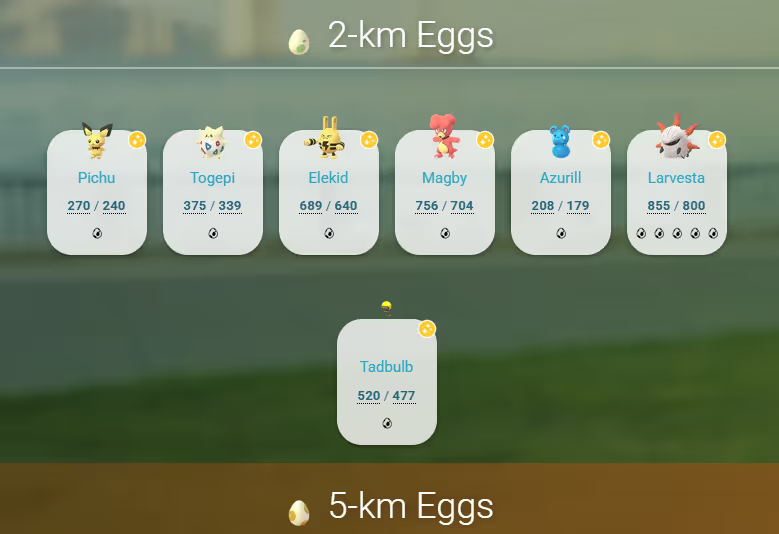
The types of eggs and their hatch pools switch up every season, and the current eggs for the Forever Forward season run from June 2 to September 8, 2026. Find out which eggs are available this season, what different Pokémon each one can hatch, and how you can get them.
Egg | How you get it | Notable Forever Forward hatches |
2 km | Spinning PokéStops and Gyms | Exeggcute, Corphish, Wynaut |
5 km | PokéStops, Gyms, Adventure Sync | Riolu, Mantyke, Flittle |
7 km | Opening Gifts from friends | Alolan Diglett, Galarian Corsola, Galarian Darumaka |
10 km | PokéStops, Gyms, Adventure Sync | Mawile, Absol, Frigibax |
12 km | Beating Team GO Rocket leaders | Sandile, Vullaby, Salandit, Varoom |
The distance walked usually reflects the rarity level of the possible hatches, with longer eggs holding rarer Pokémon. The 2 km eggs are mostly home to baby Pokémons, so they're easy to crack open and won't take much effort.
The 5km eggs this season are sneaky good because they include Riolu (that evolves into Lucario), so these eggs are definitely worth your incubators.
The 10 km eggs are basically the jackpot tier this season. Every Pokémon hatched from eggs has a guaranteed IV floor of 10/10/10, meaning they start at 66% or better with higher CP than most wild catches, and they can hatch shiny off the bat.
You also get the 7 km eggs from Gifts. This is where you will consistently receive region-exclusive forms such as the Alolan and Galarian variants, which you will acquire through opening Gifts regularly.
Routes give you another way to get 7 km eggs, and they come with a different hatch pool that leans toward regional variants. When you finish a route and do the Gift exchange with Mateo, you can get a shot at picking up a 7 km egg that may hatch Hisuian and Galarian forms. Routes provide a solution if a variant refuses to show up in your friend Gifts, so it is perfect to use if you want to keep your collection moving forward.
Lastly, the 12 km Strange eggs, which are Dark and Poison types, can only be obtained by beating a Team Go Rocket leader.
The rewards you get when you hatch eggs also scale with distance. A quick 2 km egg usually pays somewhere around 400 to 800 Stardust, while 5 km eggs and 7 km eggs land at 800 to 1,600. The 10 km eggs jump to 1,600 to 3,200, while the 12 km Strange Eggs reach 3,200 up to 6,400. Candy scales too by about 5 per hatch on short eggs and up to 40 on long ones. Shinies are usually the same as wild spawns, though certain boosted Pokémon species and Hatch Day events can give better spawn rates.
Incubators and Adventure Sync Tips
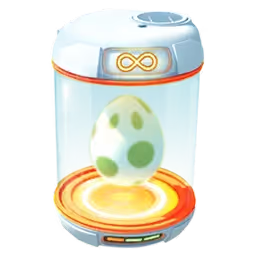
Every trainer starts with one infinite-use incubator, the orange Infinity Incubator, that never breaks no matter how many eggs you throw into it. However, everything else comes with limits. The standard blue incubator costs 150 PokéCoins and can last for only three hatches before it disappears. To make the egg hatching process faster, you would need a purple Super Incubator that is worth 200 coins and is beneficial in reducing walking distance by about a third, so a 10 km egg could hatch at 7 km. Using multiple incubators at once will help you incubate more eggs and hatch nonstop, making you earn more XP, candy, and Stardust.
Adventure Sync is the other half of the hatching setup, and the best part is it costs nothing. Just switch it on in your settings, and the Pokémon GO app will tap into your phone's fitness data even when the app is closed, counting every step toward hatching your eggs. This means your travels, grocery run, or simply just pacing around the house contribute to the distance required to hatch all the eggs you are incubating. Aside from this, it gives you weekly rewards like getting a 10 km egg when you reach 50 km within a week. Just note that these eggs have their own special hatch pool, so don't expect them to match what you'd normally get from PokéStops.
Picking the Right Eggs to Hatch
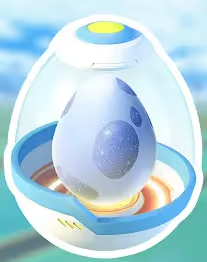
By the natural order of things, 2km eggs should hatch faster, so if you're only using the free egg incubator, hatch them first instead of the long eggs. Once you have, say, the purple Super incubator ones, save it for the 10km and 12km eggs, because they require the most walking and have the rarest hatches.
Also, it's best to time your hatches with in-game events, since these often add event Pokémon to the hatch pool that you won't find otherwise. Seasonal events provide several bonuses at once, which can make your 5 km walk profitable level-wise. Hatch events are an especially perfect time to load your incubators because they can help you hatch an egg with less distance required.
Certainly, players with boxes full of shinies and rare hatches didn't just get lucky since they kept their incubators busy and never let one be empty. Eggs reward hard work more than money. The only way to hatch more and better eggs is to cover more distance.